The phone call is the hardest part, and it is not hard. You call the office you can drive to, you say it was a car crash, and you say when. That sentence does most of the work. Missouri Injury Clinic publishes auto injuries as a lane of its own, meaning diagnosis and a treatment plan after a crash, and a front desk that hears the words car crash knows what kind of appointment to book.
What follows is the first visit as this desk understands it from what the clinic publishes and from what a proper injury exam is supposed to include. Specific details for your visit come from the clinic, on the phone, not from a website.
Before you go
Three offices, three phone numbers, and one hours quirk worth knowing. Tesson Ferry on the south side and Hazelwood on the north run Monday through Thursday 9 to 6 and Friday 9 to 12. The O'Fallon office runs Monday, Tuesday, and Thursday 9 to 6, with Wednesday and Friday by appointment. All three close from 12 to 2 every day. Aim your call for the morning or after 2, and aim your visit around that gap. Three offices across the metro has every address and number.
Bring yourself, your insurance information if you have it, and whatever you know about the crash: the date, the road, the direction, the speed as best you can guess it, where you were hit, and what your body was doing at the moment. If you already have an attorney, bring their contact so records can be sent where they need to go. You do not need to have decided anything about a claim before you get examined, and the exam does not change based on whether you have.
The history
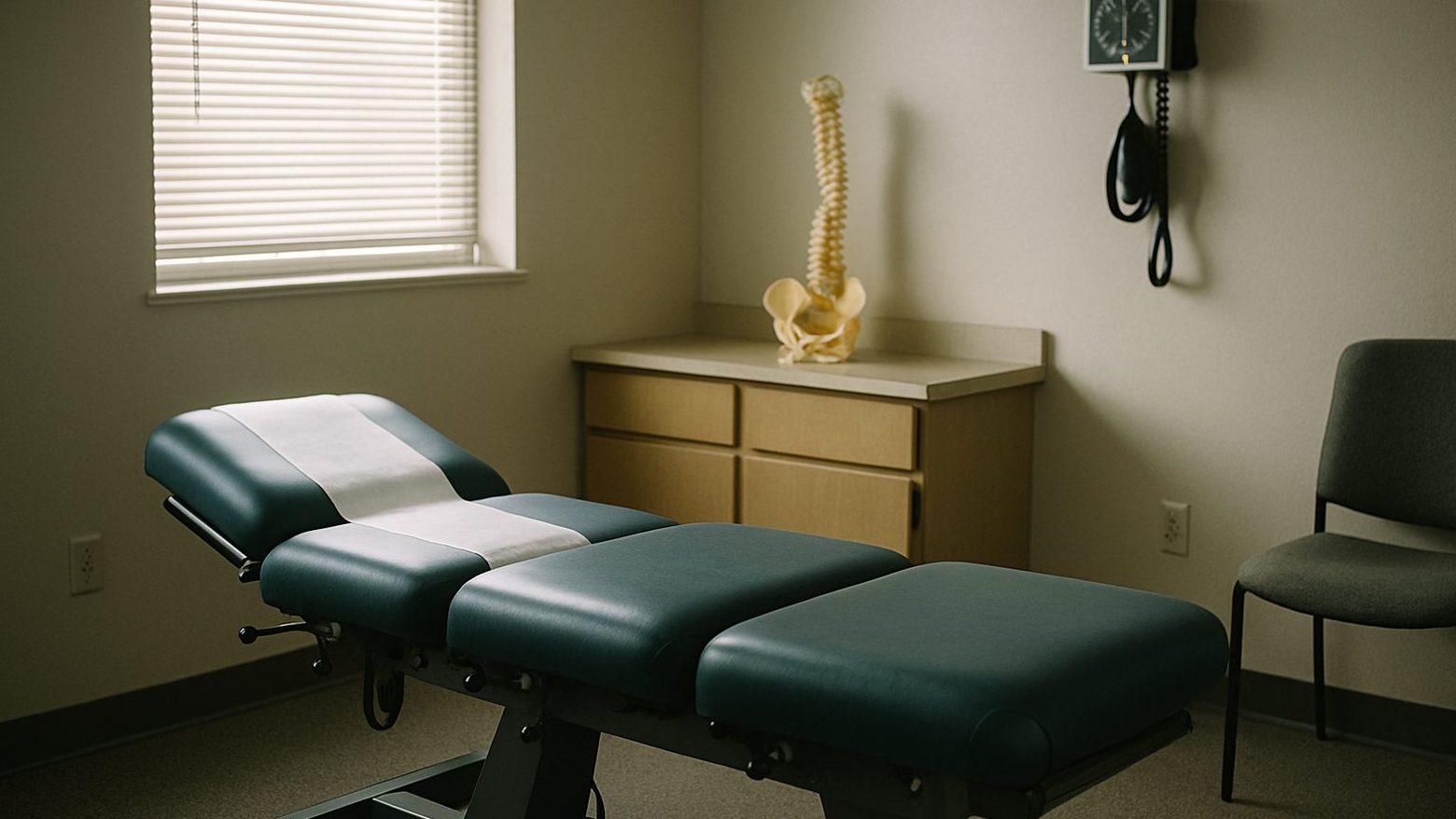
The first part of a real injury exam is talk. The clinician wants the story of the collision in your words, and then the story of your body since: what hurt first, what hurts now, what makes it worse, what you have not been able to do. Expect questions about headaches, dizziness, fog, sleep, and vision, because the neck and the brain get strained by the same motion and a good history checks both. Expect questions about your health before the crash, too. A history that records an old back problem honestly is worth more than one that pretends the spine was perfect on Monday.
Say it plainly and say all of it. The history is the first thing written in the record, and the record is a care document: it exists so the next clinician works from facts, not memory.
The examination
Then the hands-on part. An injury exam of the spine typically includes looking at posture and how you move, measuring how far the neck and back turn and bend, orthopedic tests that load specific joints to see which ones complain, and neurological checks of reflexes, strength, and sensation down the arms and legs. If the history raised the head, expect the exam to include the eyes and balance as well. Missouri Injury Clinic's concussion lane names oculomotor rehabilitation and sensory motor integration among its tools, so an exam that checks how the eyes track is not a surprise.
Whether imaging is needed is a clinical decision the examining clinician makes and explains. Do not expect a website to tell you.
The findings and the plan
The visit ends with two things in writing: what the exam found, in the form of a diagnosis if the findings support one, and what the plan is. A plan you can repeat out loud is the standard. How often, for how long, what each visit is meant to do, and what would make the clinician send you somewhere else. Ask those questions directly. The clinic publishes its auto injury lane as diagnosis plus a treatment plan, which is another way of saying the documentation is how the care is structured, not an afterthought bolted on.
Ask the clinic directly how a visit is billed and what they accept. This desk does not publish payment terms for a clinic it does not own, and it will not describe an arrangement it cannot verify.
The bright line
Chest pain, a sudden severe headache, weakness or numbness on one side, trouble speaking, a loss of bowel or bladder control, or a head injury with vomiting or worsening confusion is an emergency room trip right now, not a call to a clinic. An injury clinic is built for planned care, and a clinic that sends you to an ER instead of booking you is the system working, not a wasted trip. Emergency room or injury clinic draws that line in detail.
What the visit is not
It is not a legal consultation, because Joe Hollingsworth, DC, is a chiropractor and this is a chiropractic injury clinic, not a law office. It is not a promise about an outcome, because none should be made. It is an exam this week, findings written down and dated, and a plan. That is the whole offer, and it is enough.
Educational only. Nothing on this page is medical advice or a diagnosis; a licensed clinician who has examined you is the person to ask. Facts about the clinic come from moinjuryclinic.com. Emergency symptoms go to the emergency room, not to a clinic or a website.