The wreck was the headline. The injury is the story that follows, and in this city it usually follows late. A driver gets tapped on Gravois at a light, trades insurance cards, drives home, and sleeps badly. By the second morning the neck will not turn all the way to check a blind spot, and by the third the low back has joined in. Nothing about that timeline is unusual. It is the ordinary shape of a soft-tissue injury, and it is the reason this desk exists.
What follows is the week as this desk hears it, from the scene to the exam room. It is general information about how these injuries behave. It is not a diagnosis of anyone, and the place to get one of those is an exam at a clinic that can see you this week.
At the scene: the hour of adrenaline
Stress hormones are very good at their job. In the first hour after a collision, most people feel shaky, alert, and largely pain free. They can walk the shoulder, photograph the bumpers, and talk to an officer. Feeling fine at the scene is information about your stress response, not about your spine.
The useful things to do in that hour are simple. Get to a safe spot off the roadway. Call 911 if anyone is hurt, if there is a question about anyone being hurt, or if the vehicles cannot move. Photograph the cars and the road. Write down, on your phone if nothing else, the time, the direction you were traveling, and what your body was doing at the moment of impact: braced, turned, head looking left, foot on the brake. That last detail is the kind of thing an examining clinician will ask about and the kind of thing memory loses by Thursday.
Chest pain, a sudden severe headache, weakness or numbness on one side, trouble speaking, a loss of bowel or bladder control, or a head injury with vomiting or worsening confusion is an emergency room trip right now, not a call to a clinic. That line sits at the top of every page on this desk for a reason. The bright line between an emergency room and a clinic is its own page.
That night: the first stiffness
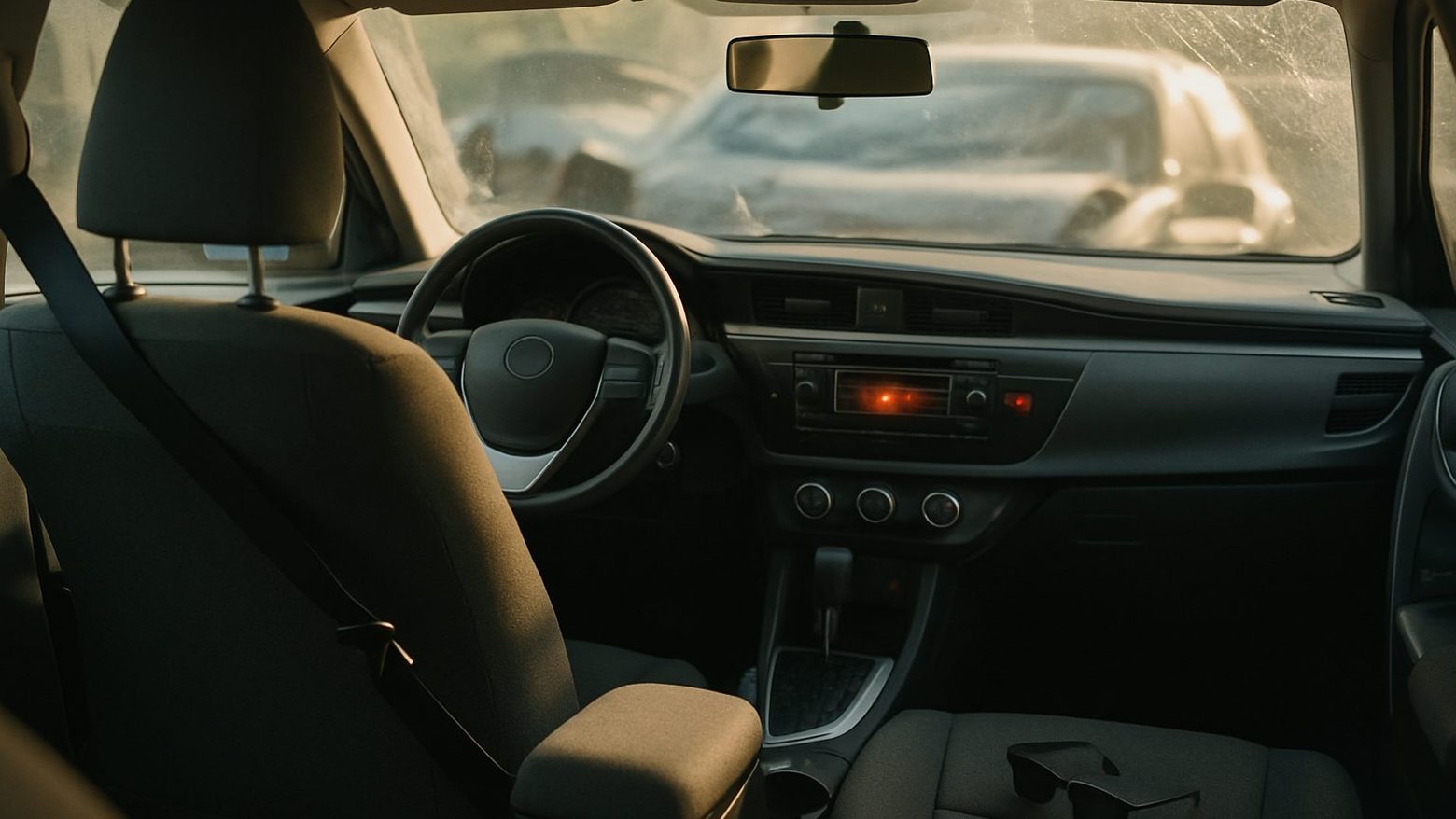
By evening the hormones are gone and the tissue starts to speak. The most common first sign is stiffness at the base of the skull and across the top of the shoulders, sometimes with a dull headache. People often describe it as having slept wrong, which is worth noticing, because nobody has slept yet.
Whiplash is the everyday word for a neck sprain and strain caused by the head moving rapidly back and forth, and the National Institute of Neurological Disorders and Stroke describes its symptoms, including neck pain and stiffness, headache, and dizziness, as sometimes taking a day or more to appear (NINDS, whiplash information). The same mechanism can load the small facet joints of the spine, the discs, and the ligaments that hold the whole column in line.
Day two and three: the lag closes
This is where the story usually turns. Swelling and muscle guarding build over 48 to 72 hours, so the second and third mornings are often the worst. Turning the head to check a mirror becomes a whole-body move. Sitting at a desk gets hard by ten o'clock. Some people notice tingling into an arm or hand, or a low back that seizes when they stand from a chair.
This is also the window where a documented exam is most useful, for two reasons that have nothing to do with each other. The first is clinical: a plan started while the tissue is most responsive has a better chance of keeping a recoverable injury recoverable. The second is the record. An exam dated this week connects the findings to the collision. The same findings in November connect to a shrug. The 72-hour lag gets its own page, because it is the single thing St. Louis drivers most often get wrong.
What a real exam looks like this week
At Missouri Injury Clinic the auto injury lane is published as diagnosis and a treatment plan after a crash. The first visit is a real examination: the history of the collision, an exam of how the neck and back move, an assessment of the spine and any joints that took load, and a written plan you can repeat out loud. You leave with findings, not a vague suggestion to rest. The first visit, minute by minute walks through it.
If your symptoms point toward the head, say so on the phone. The clinic runs a TBI and concussion rehabilitation lane in the same offices, with tools it names on its own site: oculomotor rehabilitation, neurofeedback, vagus nerve stimulation at the tragus, Alpha Stim, sensory motor integration, exercise with oxygen, and cognitive rehabilitation software. Concussion without a windshield covers why a brain can be injured by a stop, not just a strike.
Week two and beyond: what waiting costs
Most soft-tissue injuries improve with a plan. The ones that become chronic are very often the ones that were never examined, where a person guarded a sore neck for a month, changed how they sat and slept to work around it, and built a second problem on top of the first. A guess that turns out wrong in November is far more expensive than an exam in the week of the crash.
If days or weeks have already passed, go anyway. A later exam is still a real exam, and being honest about the timeline is part of the record.
If you feel fine
Then an exam is cheap insurance. A clean exam is a good outcome and a short appointment. What this paper argues against is guessing. The river city runs on hard commutes and long shifts, and the people who wait are usually the ones who cannot afford to be laid up later. Pick the office you can drive to this week.
Educational only. Nothing on this page is medical advice or a diagnosis; a licensed clinician who has examined you is the person to ask. Facts about the clinic come from moinjuryclinic.com. Emergency symptoms go to the emergency room, not to a clinic or a website.